
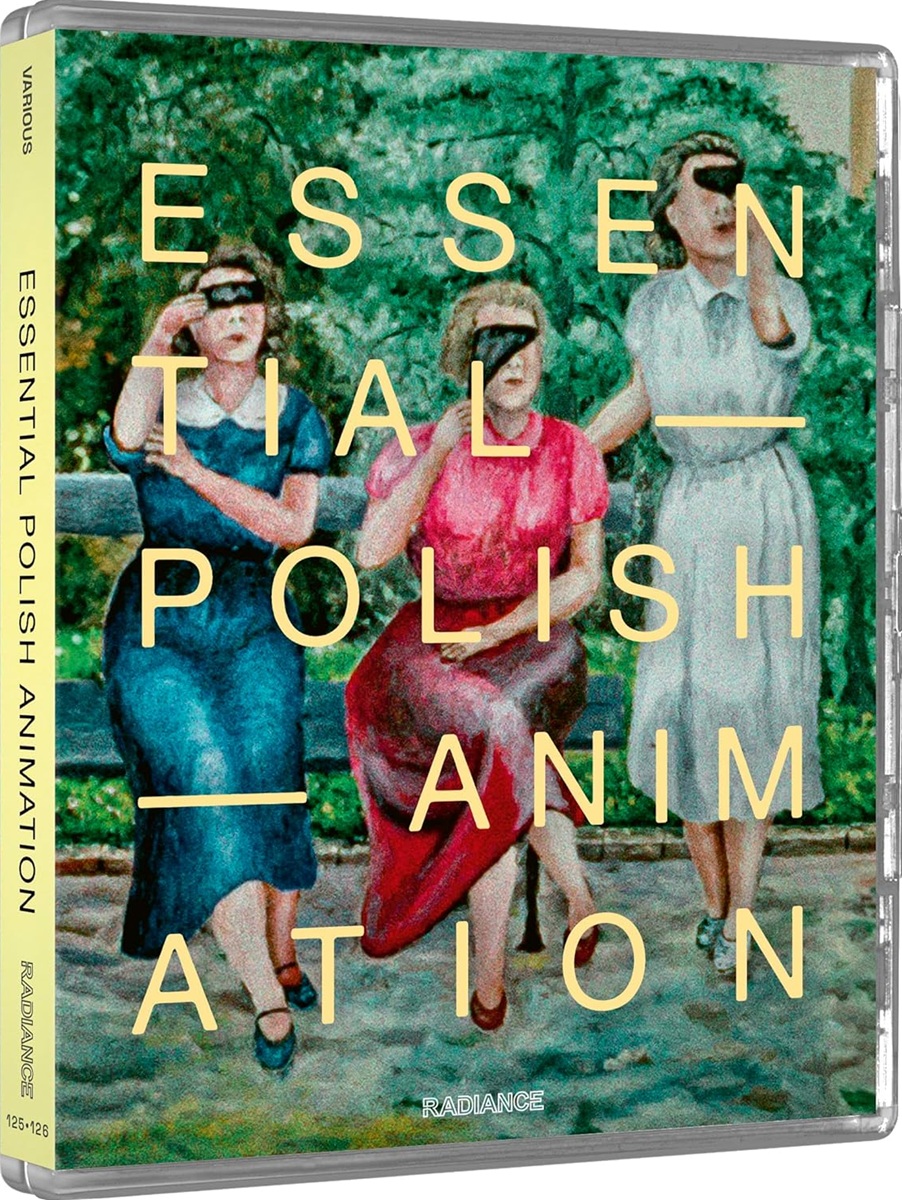
Essential Polish Animation (Limited Edition) (ej svensk text) (Blu-ray)
449 SEK
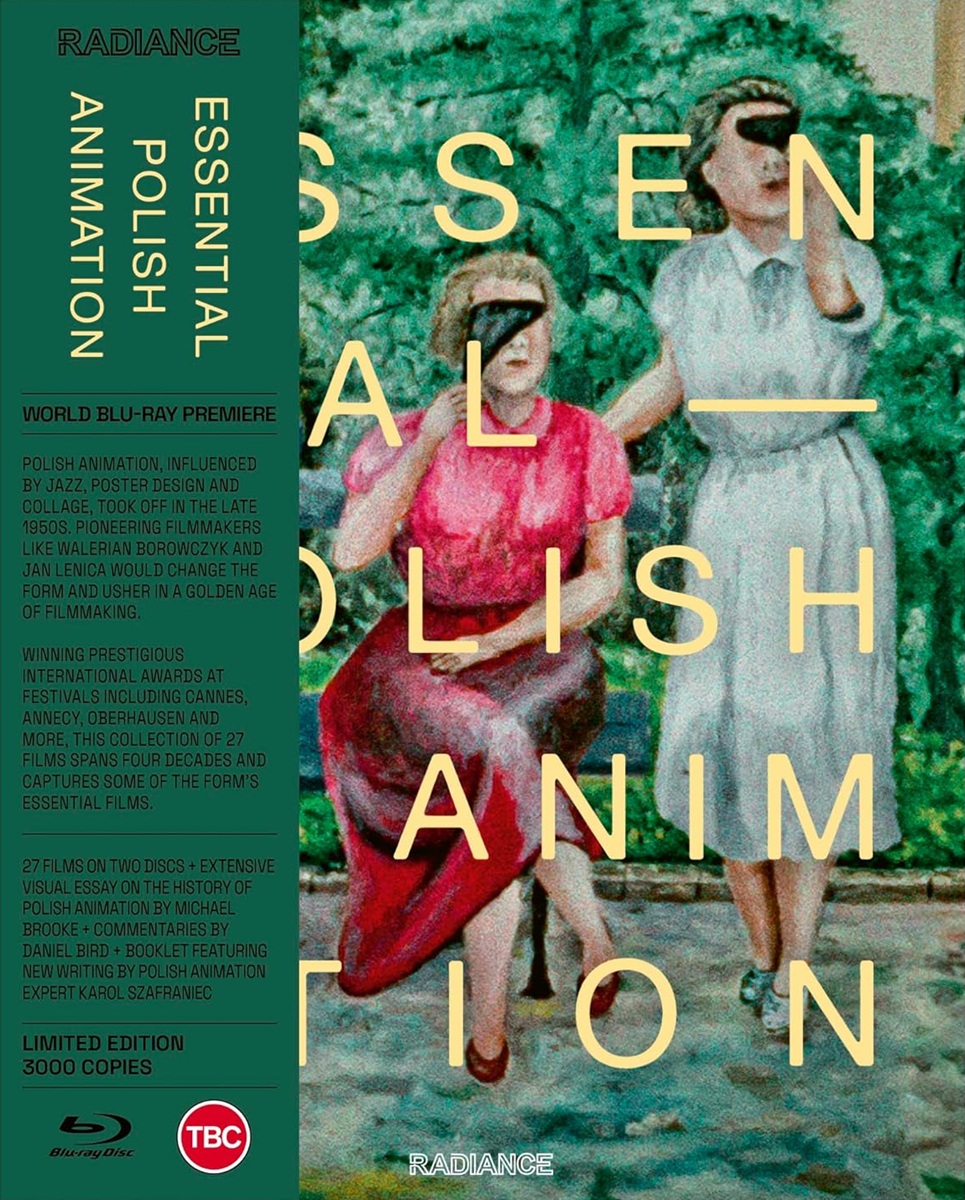
Limiterad samlingsutgåva med 27 polska animerade filmer från 1957-1986.
Ingår i kampanjen: Radiance Films
Ingår i kampanjen: Radiance Films
- Fri frakt vid köp över 1000 kr
- Svensk titelBanner of Youth / Love Requited / The Changing of the Guard / New Janko the Musician / A Little Western / Playthings / Labyrinth / The Chair / The Red and the Black / Everything is a Number / Horse / Cages / The Stairs / The Son / Journey / Roll Call / Road / The Banquet / Barrier / A Hardcore Engaged Film. Non-camera / Reflections / Tango / Solo in a Fallow Field / The Source / Chips / A Gentle Woman / Parade
- OriginaltitelSztandar Mlodych / Nagrodzone Uczucie / Zmiana Warty / Nowy Janko Muzykant / Maly western / Igraszki / Labirynt / Fotel / Czerwone i Czarne / Wszystko Jest Liczba / Kon / Klatki / Schody / Syn / Podróz / Apel / Droga / Bankiet / Szlaban / Dziadowski blues non camera, czyli nogami do przodu / Refleksy / Tango / Solo na ugorze / Źródło / Odpryski / Lagodna / Parada
- RegissörWalerian Borowczyk, Jan Lenica, Halina Bielinska, Wlodzimierz Haupe, Witold Giersz, Kazimierz Urbanski, Daniel Szczechura, Witold Giersz, Stefan Schabenbeck, Miroslaw Kijowicz, Ryszard Czekała, Daniel Szczechura, Zofia Oraczewska, Jerzy Kucia, Julian Józef Antoniszczak, Zbigniew Rybczyński, Jerzy Kalina, Piotr Dumała
- Inspelningsår1957-1986
- Bildformat1080p High Definition Widescreen
- LjudLPCM Mono
- SpråkPolska
- TextningEngelska
- GenreTecknat
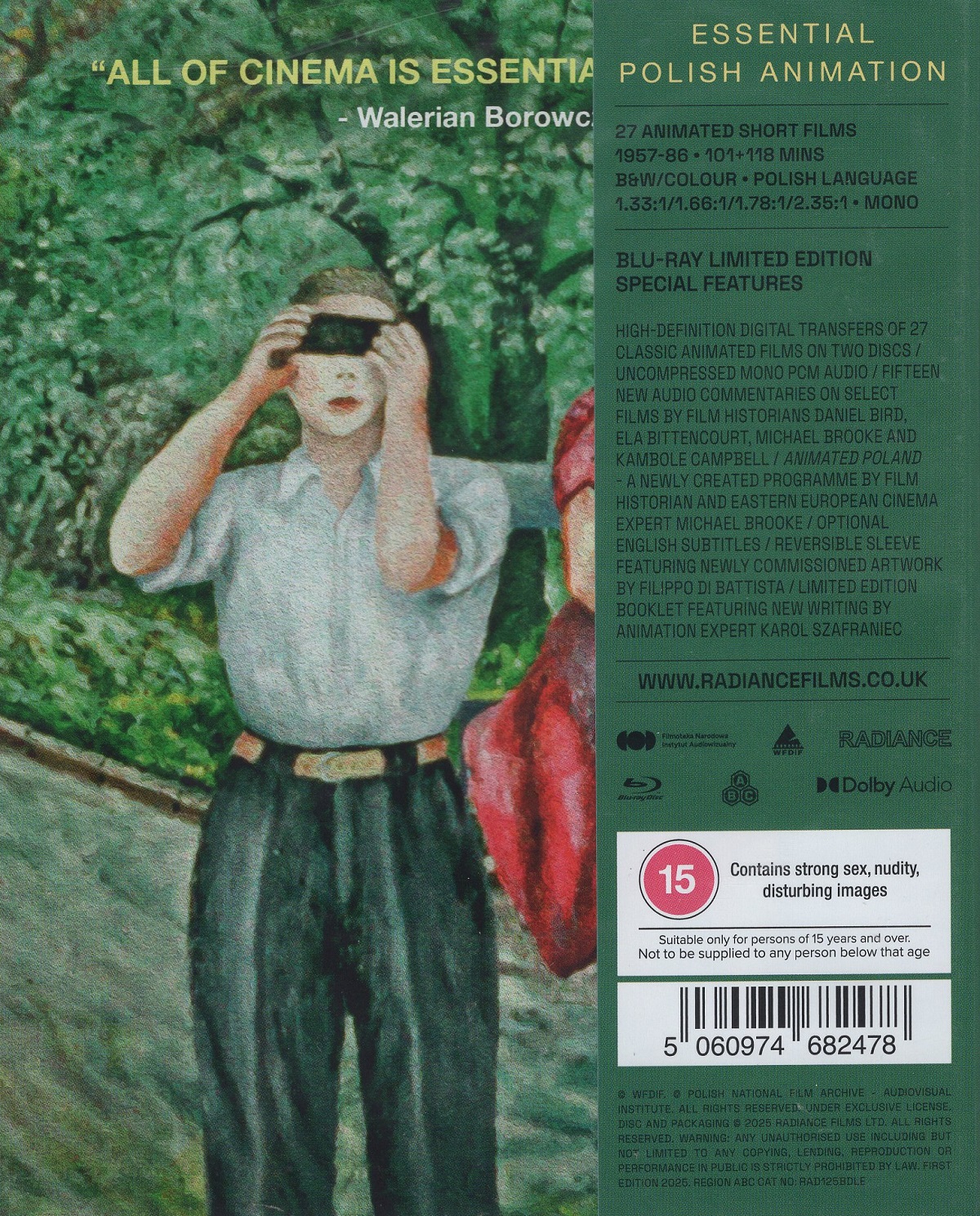
- Extramaterial- High-Definition digital transfers of 27 classic animated films on two discs - Original uncompressed PCM mono audio - Audio commentaries on select films by Polish film expert Daniel Bird (2025) - Visual essay by film historian and Eastern European cinema expert Michael Brooke (2025) - Optional English subtitles - Reversible sleeve featuring newly commissioned artwork by Filippo Di Battista - Limited edition booklet featuring new writing by animation expert Karol Szafraniec - Limited edition of 3000 copies, presented in full-height Scanavo packaging with removable OBI strip leaving packaging free of certificates and markings
- Releasedatum2025-07-25
- Åldersgräns15 år
- Antal skivor2
- Färg/svartvitFärg / Svartvit
- BolagRadiance Films UK
- OmslagsspråkEngelska
- EAN5060974682478
- Artikelnr31891
Beskrivning
Art.nr: 31891
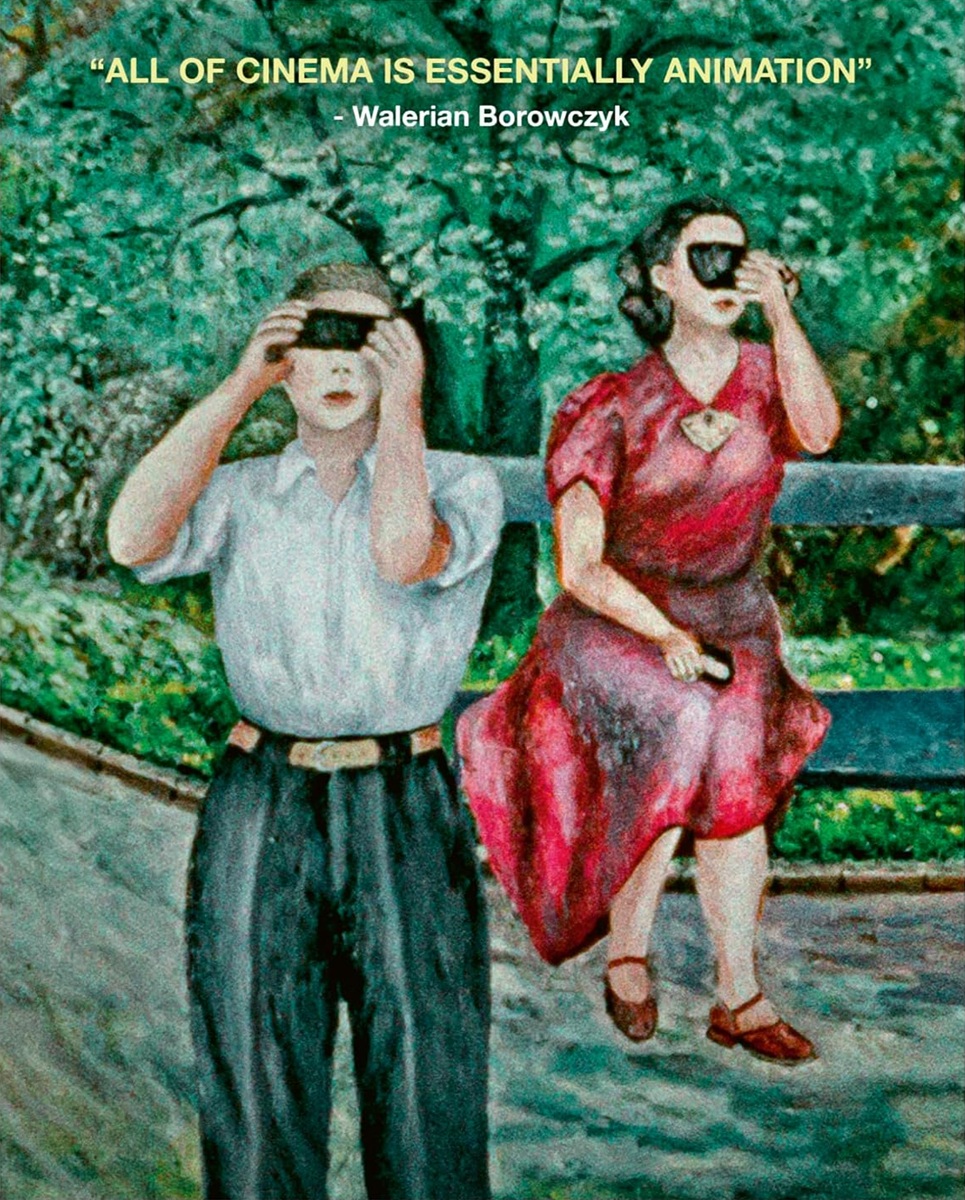
“All of cinema is essentially animation” - Walerian Borowczyk
Polish animation, influenced by jazz, poster design and collage, took off in the late 1950s when artists found creative freedom in the wake of Stalin’s death. Pioneering filmmakers like Walerian Borowczyk and Jan Lenica would change the form and usher in a golden age of filmmaking that would enable this art form to be appreciated around the world including winning prestigious international awards at festivals such as Cannes, Annecy, Oberhausen and an Oscar for Rybczyński’s Tango. This collection of 27 films spans the breakthrough works of the late 1950s to the close of the classic era in the 1980s, capturing some of the form’s essential films.
Complete List of Films:
Banner of Youth (Borowczyk, Lenica, 1957)
Love Requited (Borowczyk, Lenica, 1958)
The Changing of the Guard (Halina Bielinska, Wlodzimiez Haupe, 1959)
New Janko the Musician (Jan Lenica, 1960)
A Little Western (Witold Giersz, 1960)
Playthings (Kazimierz Urbanski, 1962)
Labyrinth (Jan Lenica, 1962)
The Chair (Daniel Szczechura, 1963)
The Red and the Black (Witold Giersz, 1964)
Everything is a Number (Stefan Schabenbeck, 1967)
Horse (Witold Giersz, 1967)
Cages (Miroslaw Kijowicz, 1967)
The Stairs (Stefan Schabenbeck, 1968)
The Son (Ryszard Czekała, 1970)
Journey (Daniel Szczechura (1970)
Roll Call (Ryszard Czekała, 1970)
Road (Miroslaw Kijowicz, 1971)
The Banquet (Zofia Oraczewska)
Barrier (Jerzy Kucia, 1977)
A Hardcore Engaged Film. Non-camera (Julian Józef Antoniszczak, 1979)
Reflections (Jerzy Kucia, 1979)
Tango (Zbigniew Rybczyński, 1980)
Solo in a Fallow Field (Jerzy Kalina, 1981)
The Source (Jerzy Kucia, 1982)
Chips (Jerzy Kucia, 1984)
A Gentle Woman (Piotr Dumała, 1985)
Parade (Jerzy Kucia, 1987)