
Koyaanisqatsi / Powaqqatsi (ej svensk text) (Blu-ray)
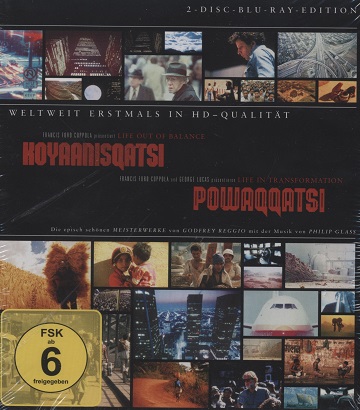
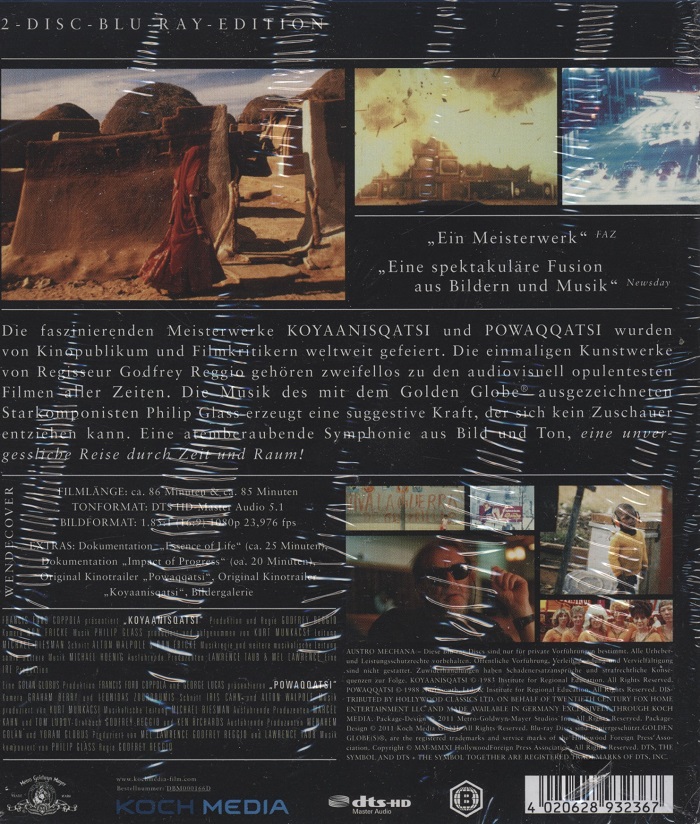
Box med filmerna "Koyaanisqatsi" och "Powaqqatsi".
ARTIKELN HAR UTGÅTT
- Fri frakt vid köp över 1000 kr
- Svensk titelKoyaanisqatsi / Powaqqatsi
- OriginaltitelKoyaanisqatsi / Powaqqatsi
- Alternativ titelKoyaanisqatsi - Life Out of Balance, Powaqqatsi - Life In Transformation
- RegissörGodfrey Reggio
- Inspelningsår1982 / 1988
- Bildformat1080p High Definition Widescreen 1.85:1
- LjudDTS 5.1 HD MA
- Speltid2 tim 51 min
- GenreDokumentär
- Releasedatum2011-10-04
- Åldersgräns11 år
- Antal skivor2
- Färg/svartvitFärg
- BolagKoch Media Tyskland
- OmslagsspråkTyska
- EAN4020628932367
- Artikelnr14852
Beskrivning
Art.nr: 14852
KOYAANISQATSI
First-time filmmaker Godfrey Reggio's experimental documentary from 1983 - shot mostly in the desert Southwest and New York City on a tiny budget with no script, then attracting the support of Francis Ford Coppola and George Lucas and enlisting the indispensable musical contribution of Philip Glass - delighted college students on the midnight circuit and fans of minimalism for many years.
Meanwhile, its techniques, merging cinematographer Ron Fricke's time-lapse shots (alternately peripatetic and hyperspeed) with Glass's reiterative music (from the meditative to the orgiastic) - as well as its ecology-minded imagery - crept into the consciousness of popular culture. The influence of "Koyaanisqatsi", or "life out of balance", has by now become unmistakable in television advertisements and music videos and this DVD provides the uninitiated the chance to see where it all started - along with an intense audiovisual rush.
POWAQQATSI
"Powaqqatsi" (1988) finds director Godfrey Reggio somewhat more directly polemical than before, and his major collaborator, the composer Philip Glass, stretching to embrace world music. Reggio reuses techniques familiar from the previous film (slow motion, time-lapse, superposition) to dramatize the effects of the so-called First World on the Third: displacement, pollution, alienation.
But he spends as much time beautifully depicting what various cultures have lost - cooperative living, a sense of joy in labor, and religious values - as he does confronting viewers with trains, airliners, coal cars, and loneliness. What had been a more or less peaceful, slow-moving, spiritually fulfilling rural existence for these "silent" people (all we hear is music and sound effects) becomes a crowded, suffocating, accelerating industrial urban hell, from Peru to Pakistan...