
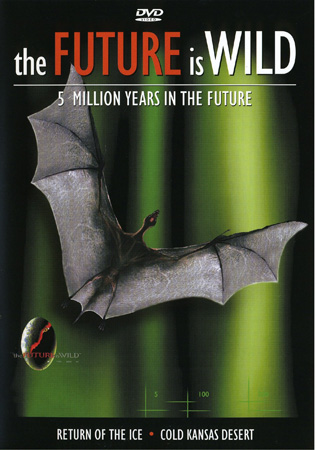
Future Is Wild - Return of the Ice/Cold Kansas Desert
Dokumentär från 2002.
ARTIKELN HAR UTGÅTT
- Fri frakt vid köp över 1000 kr
- Svensk titelthe Future is Wild: En Ny Istid
- Originaltitelthe Future is Wild - Return of the Ice / Cold Kansas Desert
- Inspelningsår2002
- BildformatWidescreen
- LjudDolby Digital 2.0
- SpråkEngelska
- TextningSvenska, Danska, Finska, Norska
- Speltid50 min
- GenreDokumentär
- Extramaterial- Picture Gallery - Sound Gallery - Descriptions of the animals - Biography of the Scientists
- Releasedatum2007-12-05
- Antal skivor1
- Färg/svartvitFärg
- Artikelnr80102
Beskrivning
Art.nr: 80102
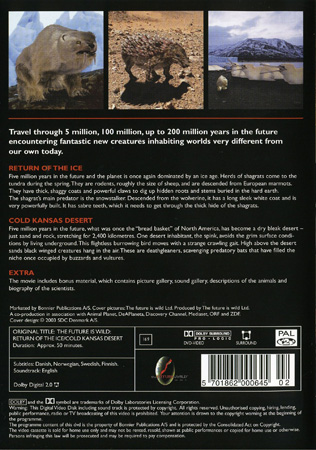
Travel through 5 million, 100 million, up to 200 million years in the future encountering fantastic new creatures inhabiting worlds very different from our own today.
RETURN OF THE ICE
Five million years in the future and the planet is once again dominated by an ice age. Herds of shagrats come to the tundra during the spring. They are rodents, roughly the size of sheep, and are descended from European marmots. They have thick, shaggy coats and powerful claws to dig up hidden roots and stems buried in the hard earth. The shagrat’s main predator is the snowstalker. Descended from the wolverine, it has a long sleek white coat and is very powerfully built. It has sabre teeth, which it needs to get through the thick hide of the shagrats.
COLD KANSAS DESERT
Five million years in the future, what was once the “bread basket” of North America, has become a dry bleak desert – just sand and rock, stretching for 2,400 kilometres. One desert inhabitant, the spink, avoids the grim surface conditions by living underground. This flightless burrowing bird moves with a strange crawling gait. High above the desert sands black winged creatures hang in the air. These are deathgleaners, scavenging predatory bats that have filled the niche once occupied by buzzards and vultures.