
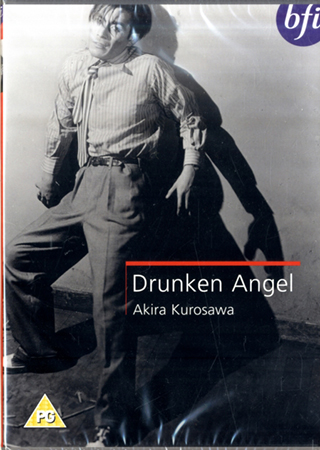
Drunken Angel (ej svensk text)
249 SEK
Thriller från 1948 av Akira Kurosawa med Takashi Shimura och Toshirô Mifune.
Ingår i kampanjen: BFI
- Fri frakt vid köp över 1000 kr
- Svensk titelDen Berusade Ängeln
- OriginaltitelYoidore Tenshi
- Alternativ titelDrunken Angel
- SkådespelareTakashi Shimura, Toshirô Mifune, Reisaburo Yamamoto, Michiyo Kogure, Chieko Nakakita, Noriko Sengoku
- RegissörAkira Kurosawa
- Inspelningsår1948
- BildformatWidescreen 1.33:1 Anamorfisk
- LjudDolby Digital 1.0
- SpråkJapanska
- TextningEngelska
- Speltid1 tim 33 min
- GenreThriller, Drama, World Cinema
- Extramaterial- 12-page illustrated booklet with notes by film historian Philip Kemp - Extract from 'The Films of Kurosawa' by Jay Leyda from Sight & Sound, Oct/Dec 1954 - Extract from 'Kurosawa on Kurosawa' from Sight & Sound, Autumn 1964
- Releasedatum2005-07-23
- ÅldersgränsBarntillåten
- Antal skivor1
- Färg/svartvitSvartvit
- BolagBritish Film Institute
- EAN5035673006382
- Artikelnr5035673006382
Beskrivning
Art.nr: 5035673006382
Drunken Angel was the film that gave Toshiro Mifune his first major screen role. The anger and energy of his performance made him a star and he went on to work with Kurosawa in 16 films. He is seen here alongside Toho regular Takashi Shimura. Drunken Angel – a film that is part gangster, part melodrama and part social critique – established their dynamic relationship and the extraordinary on-screen chemistry which Kurosawa would exploit further in films such as Stray Dog and Seven Samurai. He eventually worked with Shimura in 21 films.
Dr Sanada (Takashi Shimura), the drunken angel of the title, runs a clinic in the slums of Tokyo. When small-time hood Matsunaga (Toshiro Mifune) comes to his surgery after a gunfight, Sanada diagnoses him with tuberculosis and convinces him to begin treatment. The disillusioned doctor feels that, by saving this young yakuza, he can retrieve a sense of his own lost youth and idealism. Thus they embark on a troubled friendship which is tested by the prejudices of the two and the release from prison of Matsunaga's mobster boss.
Despite being Kurosawa's eighth feature, Drunken Angel was the director's first critical success and the first film in which he felt that he finally discovered himself. He remarked, 'In this picture I was finally myself. It was my picture. I was doing it and no one else.' The 'existential humanism' which made him famous is at the root of this extraordinary tale with the correlation between strength of spirit and physical well-being representing the two forces at work in post-war Japan.