
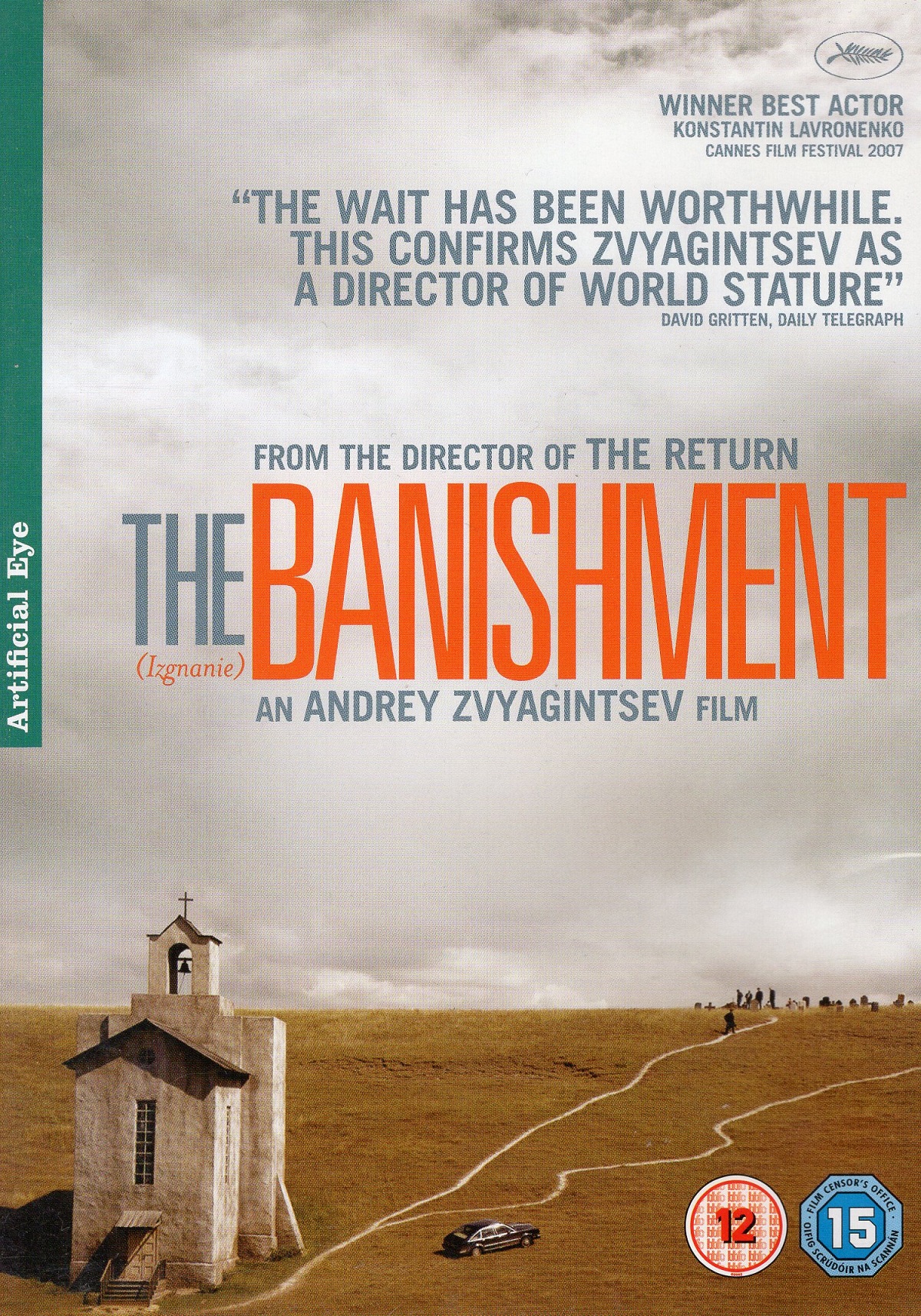
Banishment (ej svensk text)
129 SEK
Drama från 2007 av Andrey Zvyagintsev med Konstantin Lavronenko och Maria Bonnevie.
- Fri frakt vid köp över 1000 kr
- Svensk titelFörvisningen
- OriginaltitelIzgnanie
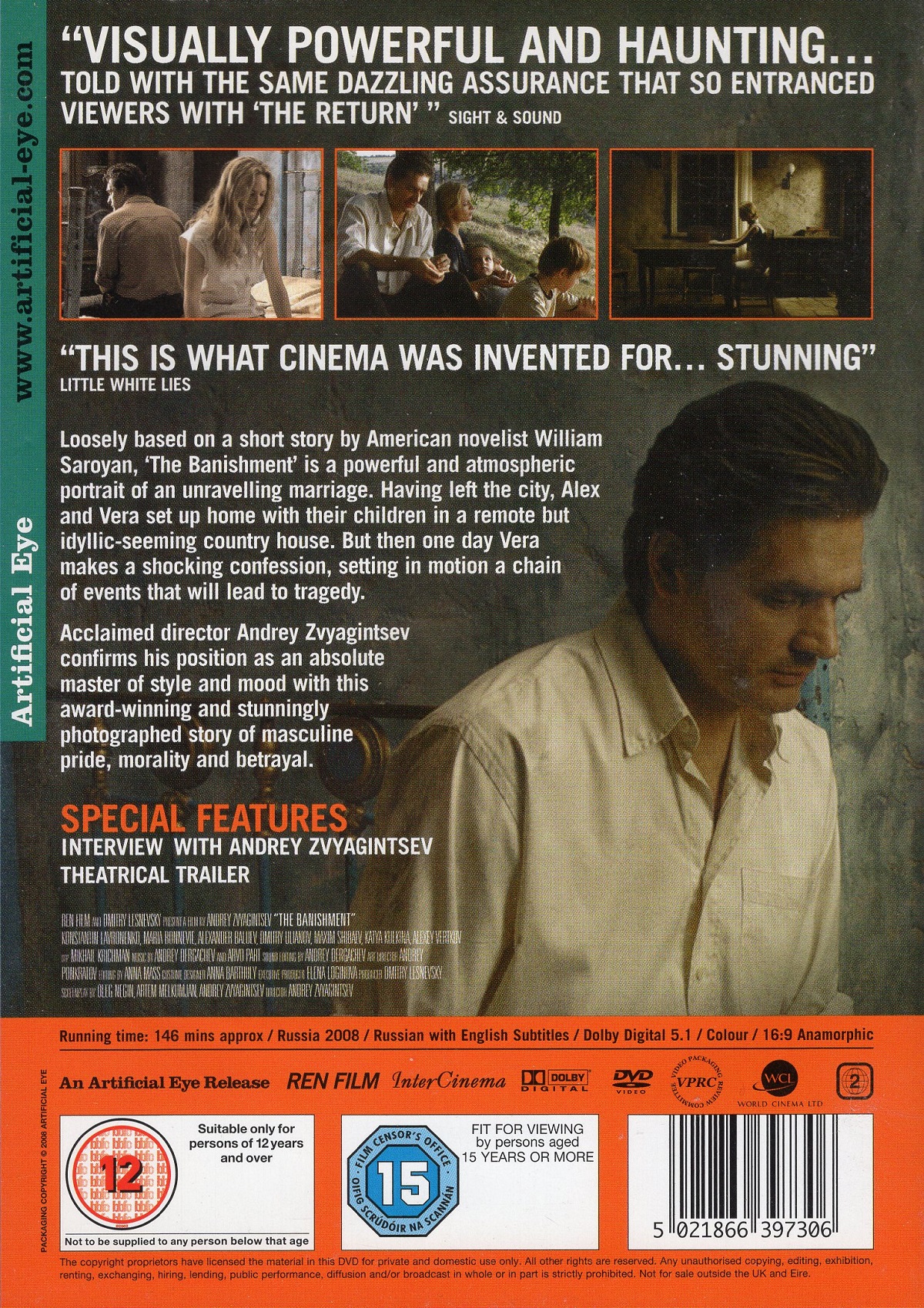
- SkådespelareKonstantin Lavronenko, Maria Bonnevie, Alexander Baluev, Dmitry Ulianov, Maxim Shibaev, Katya Kulkina, Alexey Vertkov
- RegissörAndrey Zvyagintsev
- Inspelningsår2007
- BildformatWidescreen
- LjudDolby Digital 5.1
- SpråkRyska
- TextningEngelska
- Speltid2 tim 26 min
- GenreDrama, World Cinema
- Extramaterial- Interview with Andrei Zvyagintsev - Theatrical Trailer
- Releasedatum2008-12-15
- Åldersgräns11 år
- Antal skivor1
- Färg/svartvitFärg
- BolagArtificial Eye UK
- EAN5021866397306
- Artikelnr95235
Beskrivning
Art.nr: 95235
A husband, wife and two children (a boy and a girl) come from an industrial city to the countryside, to the husband’s birthplace, to stay in his father’s old house.
In contrast to the old setting (the city that brightens up the relations between the characters, that smoothes the rough edges, and even creates some illusion of happiness and love), the new setting is Nature. It is a setting of breathtaking rolling hills, the bottom of a prehistoric sea, and fertile land, all lying in the ruins of dislike.
It is sad even though it is proud. It doesn’t let on. It will demand great sacrifice.
And no one will hold back the hand the father raises against his son. The voice crying out will not be heard. The son will not be replaced by the lamb. For the one who raises the knife has ears that cannot hear, eyes that cannot see, and a heart that cannot feel. Yet his belief in the “law” of human pride is vehement and inexhaustible, as vehement as his remorse.
The seed has been planted and the harvest must follow. To the question, “What is THE BANISHMENT about?” we respond, “Just like any other film, in one way or another, this film is about all of us – kind, beautiful people in the tragic circumstances of hopelessness.”